Steel Knowledge Hub & Guides
Deep technical briefings, ASME dimension matrices, surface electropolishing standards, and metallurgical grade selection guides curated by Sakshi Forge engineers.
Sanitary Electropolished Pipes for Dairy and Food Processing Equipment: CIP Chemistry, Milkstone and Gasket Joints
Engineering guide to sanitary electropolished pipes for dairy and food equipment: CIP caustic/acid compatibility, milkstone and biofilm control, gasket-joint crevices, 3-A.
All Technical Articles (19)
Sanitary Electropolished Pipes for Dairy and Food Processing Equipment: CIP Chemistry, Milkstone and Gasket Joints
Engineering guide to sanitary electropolished pipes for dairy and food equipment: CIP caustic/acid compatibility, milkstone and biofilm control, gasket-joint crevices, 3-A.
Orbital Welding Guidelines for Electropolished Stainless Steel Pipes: Purge Control, HAZ Metallurgy and Borescope Acceptance
Orbital welding guidelines for electropolished stainless steel pipes: argon purge and oxygen ppm control, HAZ carbide risk, sulphur matching, borescope acceptance.
Electropolished Industrial Pipes for Aggressive Chemical Environments: Acids, Chloride SCC and Flanged Joints
When electropolished pipes help in aggressive chemical service: sulphuric, phosphoric and organic acids, chloride stress corrosion cracking, alloy choice and gasketed flanges.
Difference Between Passivation and Electropolishing for Industrial Piping: Mechanisms, Standards and a Decision Matrix
Passivation vs electropolishing for industrial piping: nitric and citric passivation, electrochemical levelling, pickling, verification tests and when to specify each.
High-Precision Electropolished Instrument Tubing for Aerospace Applications: Cleanliness, Fatigue and Tolerances
Electropolished instrument tubing for aerospace test, ground-support and instrumentation lines: fluid cleanliness classes, fatigue, dimensional tolerances and what to specify.
Why Indian Pharma and Biotech Plants Are Switching to Electropolished (EP) Pipes
Indian pharma and biotech plants are moving to EP pipes for cleaner, corrosion-resistant process lines. See the reasons, standards and what to specify.
Electropolished vs Mechanically Polished Pipes: What Indian Buyers Should Know Before Ordering
Compare electropolished and mechanically polished stainless steel pipes on finish, corrosion resistance, cleanability and cost. Know which to order.
EP Pipe Price in India: What Drives the Cost and Why Buyers Still Pay More
What decides EP pipe price in India: grade, size, Ra finish, standards and testing. Learn how to compare quotes fairly and avoid hidden costs.
Why Indian Buyers Choose Locally Made EP Pipes Over Imports
Compare locally made and imported EP pipes on cost, lead time, customisation, support and compliance. See why Indian buyers prefer domestic manufacturers.
How to Choose an Electropolished Pipe Manufacturer in India: 10-Point Buyer Checklist
Choosing an EP pipe manufacturer in India? Use this 10-point checklist covering in-house EP, Ra reports, MTCs, testing, references and red flags.
304 vs 316L EP Pipes: Which Grade Do Indian Industries Buy and Why?
304 vs 316L electropolished pipes: compare composition, corrosion resistance, cost and best uses in Indian pharma, food, dairy and chemical plants.
Ra Value Explained: Surface Finish Specs Indian Pharma and Food Buyers Ask For
What is Ra value on EP pipes? Learn µm vs µin, common Ra limits (0.38, 0.5, 0.8 µm), how Ra is measured and what to specify for pharma and food.
EP Pipes for Export-Oriented Plants in India: Meeting FDA, GMP and ASME BPE Expectations
How export-oriented Indian plants should specify EP pipes for USFDA, EU-GMP, WHO-GMP and ASME BPE audits: grade, finish, documents and traceability.
Common Mistakes Indian Buyers Make When Purchasing EP Pipes (and How to Avoid Them)
Avoid costly errors when buying EP pipes in India: missing Ra specs, wrong grade, poor documents, bad packing and skipped inspection. Fixes included.

The Ultimate Guide to Electropolishing Stainless Steel Pipes & Tubes
Understand the electrochemical process that reduces surface roughness to Ra <= 0.38 µm (15 µin), critical for bioprocess, pharmaceutical, and ultra-high purity (UHP) gas delivery systems.

ASME B16.5 Flange Dimensions & Pressure Ratings Explained
A comprehensive engineering guide on Class 150 to Class 2500 Weld Neck, Slip-On, Blind, and Threaded flange specifications, bolt circle dimensions, and hydrotest pressure formulas.

Understanding Pipe Schedules: Standard Wall (STD) vs Extra Strong (XS) vs XXS
A technical analysis of nominal pipe size (NPS), wall thickness tolerances under ASTM A312 / ASME B36.10M / B36.19M, and internal pressure carrying capacity calculations using Barlow's Formula.
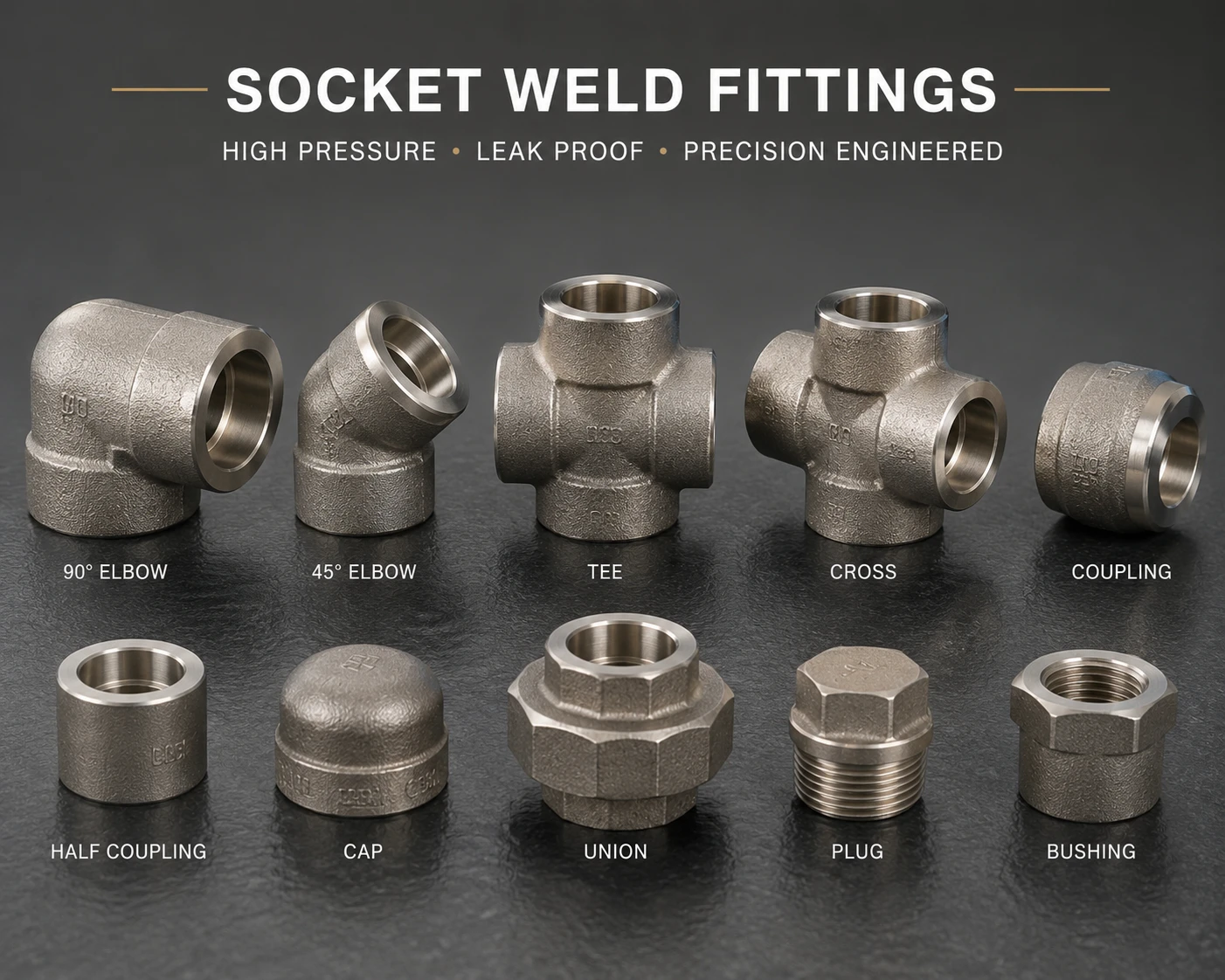
Butt Weld vs Forged Socket Weld & Threaded Fittings: Engineering Comparison
Compare ASME B16.9 butt weld fittings against ASME B16.11 Class 3000/6000 socket weld and threaded fittings for high-pressure, high-vibration hydrocarbon lines.

Hydrostatic & Pneumatic Testing Protocols for Industrial Flanges & Pipes
Step-by-step guide to hydrostatic test pressure calculations (1.5x design pressure), holding times, gauge calibration standards, and safety precautions according to ASME B31.3 and EN 10204 3.1 certification.
Partner with Sakshi Forge for Reliable Industrial Steel Solutions
Delivering precision-engineered flanges, pipes, and forged steel components designed for strength, durability, and performance in critical high-pressure industrial applications.